Saturday, November 3, 2018
China is late to the game of sci-fi and cli-fi .....but things are changing now with the release of this cli-fi movie 2019 during Lunar New Year period
China is late to the game of sci-fi and cli-fi .....but things are changing now with the release of this cli-fi movie from PRC China, h/t Tom Sear
youtube.com/watch?time_continue=5&v=MLcghUzzQCg

Thursday, November 1, 2018
An interview with Dave Gorin in Cape Town on his personal reactions to the publication in 2018 of "The Tattooist of Auschwitz"
I recently spoke with Dave Gorin, a book reviewer in South Africa who in April 2018 wrote an insightful (and somewhat critical) review of Australian romance writer Heather Morris's now-controversial Holocaust novel "The Tattooist of Auschwitz."
In his online book review, Gorin said: ''Very few writers can adequately convey the scale of suffering in the Holocaust, or what it meant to those who survived. Perhaps the most articulate, Auschwitz survivor and author Primo Levi, also warned against searching for redemptive human qualities in the quagmire of hell, because survival is often feral and instinctive, not heroic.''
You can read his full review here.
https://www.businesslive.co.za/fm/life/books/2018-04-26-book-review-the-tattooist-of-auschwitz/
In a series of recent email chats just the other day with Mr Gorin, asked him if he could say a few more things about his insights into Morris' novel. He readily agreed, but first he asked me if I could start my subsequent blog post off with this quote below.
It's an extract from the introduction to a brilliant WW1 non-fiction book by Max Hastings, titled ''Catastrophe.''
''It neatly sums up why -- crazy distortions and all -- 'The Tattooist of Auschwitz' may nevertheless contribute in some way to remembrance and ongoing acknowledgement of past horrors," Gorin told me. And it's true, as many commentators have said, despite its many inaccuracies about life in the Nazi concentration camp in Auschwitz in the 1940s, the very fact the Morris' book has become a global bestseller, shifting over 1 million copies in a dozen languages, means that an entire new generation of people will have learned some new things about the Holocaust. So the novel has server a purpose, even as if it also served as a literary failure.
Max Hastings was writing here about the complexities of understanding and interpreting history, Gorin told me, quoting from the introduction to his book:
“My generation of students eagerly devoured Barbara Tuchman’s 1962 best-seller ‘August 1914’. It came as a shock, a few years later, to hear an academic historian dismiss her book as ‘hopelessly unscholarly’. It...nonetheless...retains the unembarrassed affection of many admirers, myself included, in whom it contributed significantly to stimulating a passion for the past”.
So, yes, I agree: perhaps Morris' hot potato of a bestseller was hopelessly unscholarly, while also retaining the glowing affection of its many female admirers, in whom the breezy novel has contributed significantly to stimulating a passion for learning more about the Holocaust.
Now back to my email chat with Mr Gorin about the novel and his review back in April.
'''When I was reading the novel for my book review in April 2018, I worked out quite quickly that Morris' interviews with Lali were irrelevant, almost, to the narrative. I mean, whether you call them 'interviews' or 'chats', someone aged 87-90 cannot possibly recall details, or even time-frames. I don't mean that unkindly, it's just the nature of memory, and it's not especially unique to old people. Memory distorts -- we 'think' we remember clearly, but it's our own narrative of the reality we have experienced. And, admittedly in my limited understanding of psychology, the mind copes with traumatic events (especially sustained trauma) by soothing or 'flexing' reality. Or, in the case of people with perhaps larger egos, amplifying heroism...although I'm not saying that's the case here. So, in my view, Morris definitely 'massaged' the memory of her star witness, and whether she did that deliberately or naively, only she knows."
I asked Mr Gorin: "Her book, like any other novel set in the Holocaust, can be flawed. What are the major flaws in your opinion?"
"In general, I think the flaws in many novels which use the Holocaust as a setting -- especially, obviously, those set directly within the death-camps -- is a distortion of the reality of the time," Gorin told me. "You can see this so clearly in the first chapter of Morris's book. It's not even in what she describes -- it's in the style! I found it cringe-inducing, in the sense that she writes like a Mills and Boon romance author. I had to gulp, and then for the sake of my review, just keep going. I think a novelist has to try to understand the setting she chooses, and when there's a disconnect, the novel simply can't work. ''
He added: "More specifically, in this book, she lacks both historical understanding, and the self-awareness, to appreciate the profundity of the setting. In a way -- which I think is your perspective, Danny, and that of perhaps her vehement critics -- it's an appalling intrusion to even try to write something without the requisite knowledge and awareness. I am not quite so appalled, in a way I feel it's important to keep the next generation interested in this part of history, so if the price is a romanticized and sanitized version, well, perhaps that's better than the Holocaust disappearing from millennials' and Gen-Z's radars. Where I do get annoyed is the extent of her self-enrichment, if that's happening (and I don't know if it is)."
I then asked if Lali Sokolov’s ''nine lives'' in the storyline plot added useful and truthful drama for modern-day readers, so many years after the end of the Holocaust.
Dave replied: ''Yes, these are examples of the 'fictionalization' or 'Hollywood distortion' of the story which, per above, are either disgusting or sigh-inducing, depending on one's perspective. Morris would argue that all historical fiction manufactures moments of 'fantasy' within the setting, so she's entitled to imagine a story within the setting.''
I asked Dave about this, too: ''Morris takes the narrative to absurd levels in describing a football match between SS guards and inmates. Sokolov may have told her of matches -- there was a soccer field near Crematorium 3 that was used by British POWs imprisoned separately from the main Auschwitz complex but according to the Holocaust experts in Poland and elsewhere matcges between inmates and SS guards were impossible. It’s impossible to imagine games between SS guards and the emaciated prisoners they regarded as subhuman and with whom contact was shunned, no?"
Mr Gorin replied: ''I pondered this one a lot. I was gobsmacked at the naivety of that passage in the novel. I spent a fair amount of time Google-ing whether it could possibly have been true. I've studied WW2 history a fair bit, and I was aware of football games between prisoner groups, but only POWs. To me, this was the most stupid part of the book, and Morris most clearly laid bare her lack of knowledge and respect for the setting.''
I asked Dave to comment about these observations too, where he wrote in his review: ''A scene where Lali and Gita furtively make love is described in the terms of a romance novel. Their conversations comprise cliched, surreal, Hollywood dialogue.''
Many female readers wrote very positive and glowing online reviews where said they said they choked up and cried when they read this part of the book, where Morris wrote: "Lale sweeps Gita up into his arms and kisses her."
Gorin's response to my question was well put.
"We are left with a narrative shell, an outline of a man’s incredible survival that has the textbook context of Auschwitz but not the intuitive sensibility of its hellfire horrors and torments, nor the complex emotions of those pulled from the brink of the abyss."
He added: "Ultimately Mrs. Morris should have tried her hand at being a Mills and Boon writer. She would have been good at it. (I don't know what her screenplays are like, and after reading her novel I have no interest in reading anything else by her.) Per my other answers above, I think I'm a bit more accepting or philosophical about this than you are, Danny. Lying is never morally good...or could it be, if it serves a higher purpose, in this case raising awareness (albeit a distorted one) of the Holocaust? I suppose the Australian editor and publisher saw the prospect of a financial windfall...this is what pisses me off. Some portion of the profits should go to an appropriate charity or Holocaust foundation, morally. But I am too cynical of the ways of the world to expect that.''
My last question that I put to Mr Gorin was this: "You ending your book review with this sentence: 'Unfortunately, this novel goes only skin-deep.' So then why do you think the novel has become such a global bestseller with 90 percent female readers and only 10 percent male readers?"
Mr Gorin replied: ''Sheer ignorance. The modern world. Social media has dumbed down the literary and cultural environment. Women love an impossible romance. The influence of the royal wedding. Good marketing. Tattoos are now very popular, almost everyone aged 18-35 has one (so the cover title grabbed people!) Take your pick -- or all of the above.''
Tuesday, October 30, 2018
The arrival of ‘Warmer’ -- 7 new works of short 'cli-fi' stories -- signals 'Amazon Original Stories' interest in social/literary relevance. - #Clifi News via Publishing Perspectives' CEO .@Porter_Anderson - https://publishingperspectives.com/2018/10/amazon-original-stories-introduces-cli-fi-collection-with-literary-studio-plympton/?utm_source=dlvr.it&utm_medium=facebook / goo.gl/fb/j3nmn9
The arrival of ‘Warmer’ -- 7 new works of short 'cli-fi' stories -- signals 'Amazon Original Stories' interest in social/literary relevance. - #Clifi News via Publishing Perspectives' CEO .@Porter_Anderson - https://publishingperspectives.com/2018/10/amazon-original-stories-introduces-cli-fi-collection-with-literary-studio-plympton/?utm_source=dlvr.it&utm_medium=facebook /
Monday, October 29, 2018
Introducing India's brilliant novelist and short story writer Shubhangi Swarup
Introducing India's brilliant debut *novelist* and short story writer Shubhangi Swarup - blog post by literary blogger Danny Bloom in Taiwan - https://korgw101.blogspot.com/2018/10/margaret-e-atwood-margaretatwood-tweeted.html #India #SubhangiSwarup #LattitudesOfLonging
Introducing India's most brilliant novelist and short story writer Shubhangi Swarup
"Last night, my wife accused me of being menopausal. She said that I was having a midlife crisis, and I needed help. The truth is, I don’t know any better," the mesmerizing Indian writer Shubhangi Swarup 's short story "Confessions of a Menopausal Man" begins. "I’m a responsible man. I have quadrupled my parents’ financial portfolio over the years. I don’t let my wife go alone to the gynaec, as I know they scare her, those swabs and prods. So what if I go drinking with my buddies, leaving her alone with the baby, I know when his next vaccination is due! It’s on my Google calender."
A novelist, a journalist, a racounteur and a great interview subject herself (see the charming YouTube interview with her here), Swarup wrote "Confessions of a Menopausal Man" from the point of view of a man, and if you read the story online here, you will be amazed her fluid and fluent dexterity in putting herself into the voice of a male narrator. I read the story the other day and was blown away by its approach to gender.
“The rise of a single degree may have caused the catastrophe, but when all life vanishes, it feels oddly cold” is how one reviewer described this very original short story, adding: "Shubhangi Swarup examines the psyche of a man who finds himself nurturing a young life at a time when the planet is sending strong warnings to humanity."
Do read the story here.
And see a charming video interview with the author by TV host Sharin Bhatti here.
and here:
https://youtu.be/tjqG2FLjPtc
Shubhangi Swarup was born in 1982 in India. She is now a bestselling novelist, too. "Latitudes of Longing," her well-received first novel, came out in 2018 and garnered a host of appreciative reviews. The manuscript faced many obstacles before one enterprising publisher took a gamble on it.
"I wanted to use my first chapter [in my novel] in the application for a fellowship but I was told that it lacked flow. This naturally upset me," Swarup good-naturedly told an interviewer, explaining that at first like many first-time novelists she faced an uphill battle in finding a publisher. But what was initially a disjointed and disconnected way of telling a story, staccato almost, eventually became her strength.
"The words on the page would freeze up when I tried to impose my will," she admitted. So she just went with the flow and the flow won.
The 36-year-old writer's debut novel has now taken the Indian literary community by storm, and has also been sold to several countries in translation in French, Swedish and Norwegian, among others. This is the making of a major Indian literary debut which won the Tata Literature Live First Book Award in 2018. It's only available in English now, but it could reach a global audience soon since it's set to come out in several foreign languages, according to book industry sources in New York.
Publishers Weekly, a major trade magazine in the English-speaking world, gives the novel high marks, nothing that Swarup's book "depicts a sweeping view of the Earth through the lives of interconnected characters, including a scientist who studies trees and a clairvoyant who speaks to them.” Translation rights have already been sold to publishers in France, Norway and Sweden, with more to come, PW said.
Could a Hollywood movie be far behind? If Yann Martel's bestseller "Life of Pi" was turned into a movie by master director Ang Lee of Taiwan, surely a movie option for Swarup's debut wonder is being talked about by Hollywood producers as we speak. It's that good, and has wild cinematic possibilties.
"The writing is exquisite and [Swarup] tells a compelling story, beginning at the beginning and ending at the end, the way good old stories used to run," wrote Indian book reviewer Latha Anantharaman. "Lyrical, original and heartbreaking, 'Latitudes of Longing' is a vast novel. In order to write in such detail about so many global locations, the author obviously had to do a great amount of research, and yet it has the ring of total authenticity. A wonderful book which, with landscape, Earth and sea as principal characters, seemed to invent a genre all of its own.''
Call it Indian ''magical surrealism.''
"A brilliant debut that blends natural with supernatural, human with otherworldly," said another reviewer in Mumbai.
If there is just one Indian novel you read in 2019, let it be this one. It will broaden your horizons, wherever you live.
============================
Bonus extra added:
Margaret E. Atwood (MargaretAtwood) tweeted at 0:57 PM on Tuesday, January 26, 2016: ''A Talk with a Cli-Fi Activist'' https://t.co/8Lto41eKgX
(https://twitter.com/MargaretAtwood/status/691847356287991810?s=03) #CliFi
Ryan Kwanten & Kodi Smit-McPhee Lead Oz Cli-Fi Thriller ‘2067’; Shoot is Underway; Kew Has Inked North America Deal
Ryan Kwanten & Kodi Smit-McPhee Lead Oz Cli-Fi Thriller ‘2067’; Shoot is Underway; Kew Has Inked North America Deal
Cli-fi movies are coming to Australia now.
Yes, an Australian cli-fi thriller titled 2067 is in production now and set for release Down Under and worldwide in 2019.
It's a climate change cli-fi-thriller. Australian writer and director Seth Larney is writing and directing ''2067,'' a feature about humans looking to the future for answers after the planet’s forests, wildlife and plants are ravaged by climate change. Ryan Kwanten (True Blood) and Kodi Smit-McPhee (X-Men Apocalypse) lead a cast that includes Deborah Mailman, Aaron Glenane, Damian Walshe-Howling, Leeanna Walsman, Finn Little, Sana’a Shaik and Matt Testro.
“This is an elevated cli-fi story that is very much character driven, and this is where having actors of this caliber and gravitas pay great dividends. We’re happy to introduce a film we believe has great breakout potential,” Jonathan Ford, EVP of Sales, Distribution at Kew Media, said.
Principal photography on ''2067'' began earlier in the summer of 2018 at Adelaide Studios in South Australia.
Also starring are Deborah Mailman (The Sapphires), Aaron Glenane (Killing Ground), Damian Walshe-Howling (Mystery Road), Leeanna Walsman (Safe Harbour), Finn Little (Storm Boy) and Oz newcomers Sana’a Shaik and Matt Testro.
Seth Larney (Tombiruo) is writing and directing the feature which will see humans looking to the future for answers after the planet’s forests, wildlife and plants are ravaged by climate change. Producing are Lisa Shaunessy (Killing Ground) through her Arcadia production banner, and Kate Croser of Kojo Entertainment.
Kew Media Distribution, part of Kew Media Group, is handling international sales, excluding Australia and New Zealand where Umbrella Entertainment has distribution rights. Shout! Studios has acquired all North American rights. The film started principal photography at Adelaide Studios, South Australia on November 3.
Australian Government funding and investment partners on the film include Screen Australia, South Australian Film Corporation (SAFC) and Create NSW (New South Wales). Executive producers are Michael Rymer (Battlestar Galactica), Alexandra Burke, Craig McMahon, James Boyce and Claire Evans, Jeff Harrison and Ari Harrison, Josh Pomeranz and Adam Scott, Will Gammon, Bryce Menzies and Clement Dunn.
Jonathan Ford, EVP of Sales, Distribution at Kew Media said, “The story of 2067 is enough to excite cli-fi fans worldwide but when you add actors like Kodi, Ryan, Deborah, Damian and Leeanna, the meter rises even higher and audiences expect something very special, which is what will be delivered here. This is an elevated sci-fi story that is very much character driven, and this is where having actors of this caliber and gravitas pay great dividends. We’re happy to introduce a film we believe has great breakout potential.”
Kodi Smit-McPhee is represented by ICM Partners. Ryan Kwanten is represented by RGM Artists, WME and Link Entertainment. Deborah Mailman, Damian Walshe-Howling and Leeanna Walsman are represented by Sue Barnett and Associates.
Seth Larney, who has spent most of his career on the digital management and effects side of pics working on titles such as The Matrix Reloaded and Star Wars: Revenge of the Sith, will direct from his own original screenplay. Lisa Shaunessy (Killing Ground) and Leonie Mansfield of Arcadia will produce with Buffalo Gal Pictures’ Phyllis Laing, Kojo Entertainment’s Kate Croser with Michael Rymer exec producing.
2067 is described as an elevated cli-fi mystery thriller set against the backdrop of a world destroyed by climate change. After years of doing too little to reverse the damage to the environment, humans are paying a terrible price – forests, plants and wildlife are gone, and soon humans will be too. With no cure in sight, the only place humanity can look for help is to the future.
Sunday, October 28, 2018
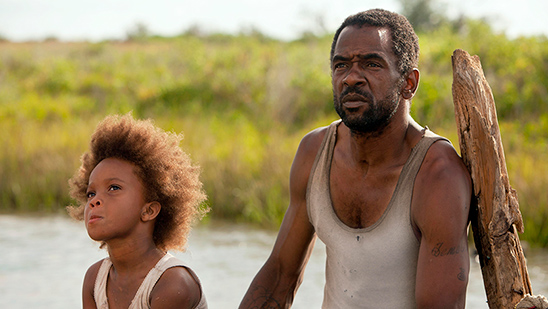
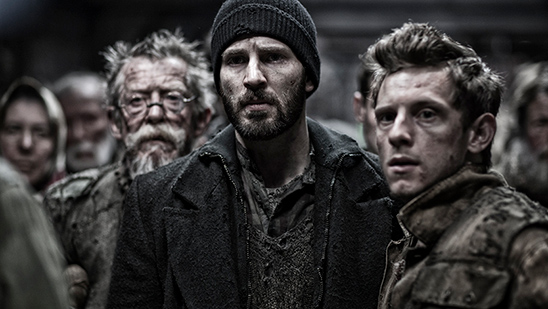
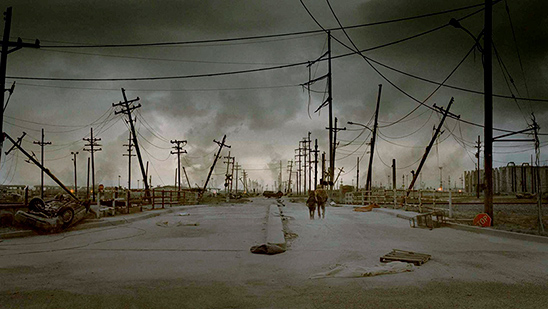
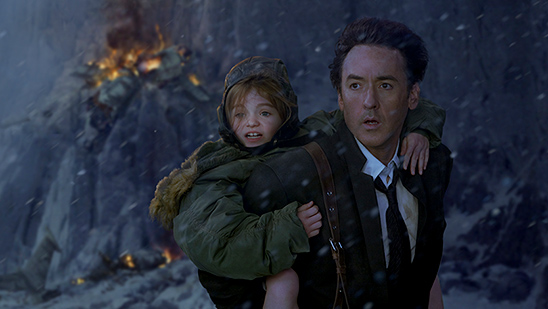
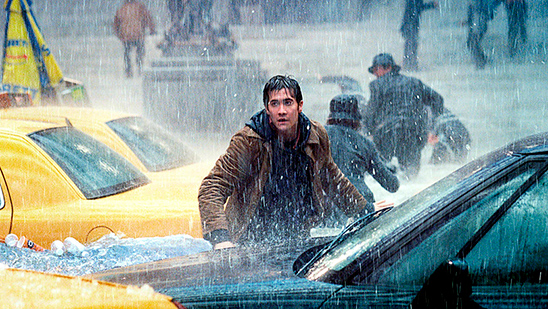
17 #FREE cli-fi movies online The first English cli-fi movie series for Cinemateket online from Denmark

17 #FREE cli-fi movies online The first English cli-fi movie series for Cinemateket online in Denmark: A series of Hollywood cli-fi films in which the action is dictated by climate (change). Fiction or reality? Come see them here, free.
https://www.dfi.dk/cinemateket/biograf/filmserier/serie/cli-fi
FILM I SERIEN






Subscribe to:
Posts (Atom)